You've probably seen them everywhere: embroidered logos on backpacks, colorful emblems on denim jackets, and custom banners at events. If you've ever considered starting a merch line without the risk of holding inventory, print on demand is the answer. It's a model that lets you sell custom products without upfront costs, and custom patches are a perfect product to start with. In this guide, I'll share everything I've learned from running my own POD patch business, including practical tips that can save you time and money.
Why Custom Patches Are a Print on Demand Favorite
Patches have a nostalgic appeal that few products match. They remind people of scouts, military service, and rock bands. But today, they're also a way for modern brands to create a sense of belonging. When you sell custom patches through print on demand, you tap into that emotional connection without dealing with production delays or unsold stock. I've seen small businesses, influencers, and even non-profits use patches to turn casual followers into loyal fans. The key is that patches are durable, versatile, and highly collectible.
The Rise of Custom Banners in Branding
While patches are compact, custom banner printing has become equally popular for businesses looking to make a statement. Banners are perfect for trade shows, storefronts, and events. They offer a large canvas for your message, and with print on demand, you can order them as needed, whether it's one for a single event or fifty for a nationwide campaign. I've used custom banners to promote my own brand at local markets, and they always draw attention, especially when they're well-designed.
How Print on Demand Works for Patches and Banners
The print on demand model is straightforward: you upload your designs to a POD platform, they list the products on your store, and when a customer orders, the platform prints and ships the item. You don't buy inventory, so there's no risk. For patches, this means you can test multiple designs without committing to large quantities. For banners, it means you can update your marketing material as often as you like.
When I first started, I was skeptical about the quality. But after ordering samples from several providers, I found that many use advanced embroidery machines that replicate intricate details beautifully. The same goes for banner printing: modern digital printers produce vibrant, weather-resistant colors.
Designing Patches That Sell
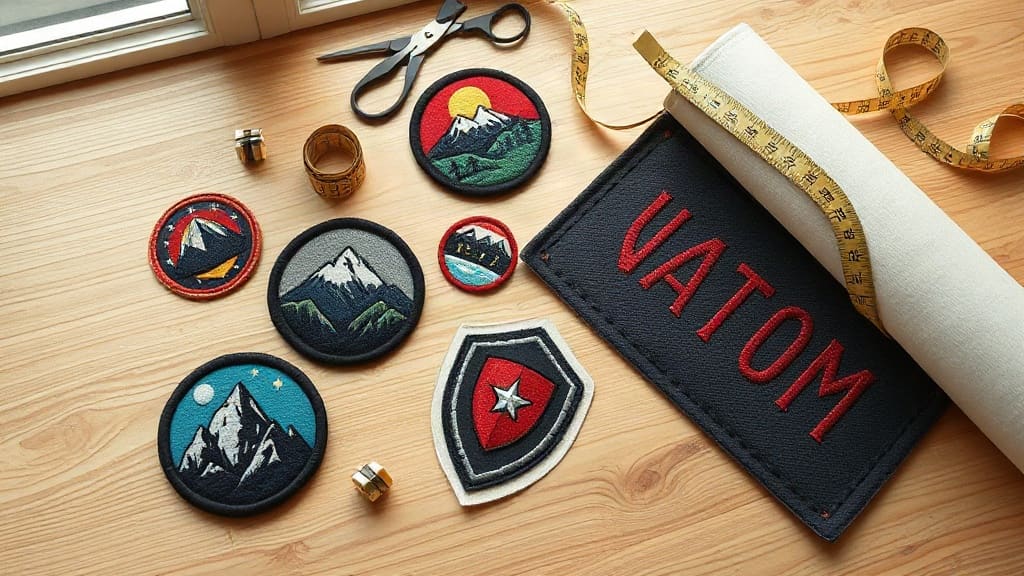
Your patch design is everything. It must be simple enough to read at a distance but detailed enough to feel premium. Here are some rules I follow:
- Keep your design within 3-4 colors to reduce costs and maintain clarity.
- Use bold shapes and avoid tiny text that will become unreadable when scaled down.
- Choose a shape that fits your brand: round, shield, or custom die-cut.
- Think about the background: a patch with a border looks more finished.
I remember designing a patch for a hiking club. The first version had a mountain silhouette with a small sun. It looked fine on screen, but after production, the sun was lost. I simplified it to just the mountain with a clear sky, and it became a bestseller. The lesson: simplicity sells.
Using Custom Banners for Maximum Impact
Banners are different from patches because they carry more text and require a different design approach. When creating a custom banner, always prioritize legibility. Use high-contrast colors, large fonts, and a clear call to action. I've seen too many banners that are visually stunning but impossible to read from across a room. Remember, your banner is often the first impression people have of your brand at an event.
Choosing the Right POD Platform
There are many print on demand services, but not all are created equal. For patches, look for platforms that offer embroidered patches specifically, as some only do printed adhesive patches. For banners, check the maximum size and material options. I recommend ordering a sample from any platform before committing. Also, consider the platform's integration with e-commerce sites like Shopify or Etsy. Most major platforms like Printful, Printify, and CustomCat offer easy integration. But don't overlook smaller specialized providers who might offer better quality for niche products.
Setting Up Your Online Store
Once you've chosen a platform, you need a storefront. You can use Shopify, WooCommerce, or even Etsy. The key is to make your product pages clear and enticing. Use high-quality mockups that show the patch in real-life situations, like on a jacket or backpack. For banners, show them at an event or on a building. I always include a size guide and care instructions, which reduces returns and increases customer trust.
Marketing Your Custom Patches
Marketing is where many POD sellers fail. They think that just listing a product is enough. But with millions of products online, you need to stand out. Social media is your friend: Instagram and Pinterest are great for visual products like patches. Post photos of people wearing them, run contests, collaborate with influencers. I once partnered with a local band to create a patch for their album release. They promoted it to their fans, and we sold out in a week. That's the power of community.
For banners, marketing is often local. If you're selling custom banners to local businesses, attend networking events, offer a discount for first-time customers, and showcase your work on a portfolio website. Word of mouth is powerful in the B2B space.
Pricing Strategies for Profit
Pricing can be tricky. You want to be competitive but still make a profit. A typical embroidered patch costs between $2 and $5 to produce, depending on size and complexity. Most sellers price them at $10-$20. That's a healthy margin. For banners, production costs are higher, but so are the prices. A 3x5 foot banner might cost $20 to print and sell for $50-$100. Always factor in shipping costs and platform fees. I use a simple formula: base cost + 50% profit margin, then adjust based on market research.
Scaling Your Print on Demand Business
Once you've established a steady stream of sales, you can scale. This doesn't mean buying inventory; it means expanding your product line. You can offer custom patches in different sizes, or create bundles with custom banners. You can also start a subscription service where customers receive a new patch every month. That's a great way to build recurring revenue. My friend runs a monthly patch club for outdoor enthusiasts, and it's been incredibly successful. He focuses on high-quality designs and limited editions, which creates urgency.
Common Pitfalls to Avoid
I've made almost every mistake in the book, so let me save you the trouble. First, don't ignore your target audience. A patch for a gaming community will look different than one for a gardening club. Second, don't skimp on samples. Order your own products to check quality and shipping times. Third, don't neglect customer service. Even with POD, you'll get questions about sizing, shipping, and design changes. Respond promptly and professionally.
Another pitfall is using copyrighted designs. Always create original artwork or get proper licenses. I've seen sellers get their stores shut down for using Disney characters without permission. It's not worth the risk.
Future Trends in Print on Demand
The POD industry is evolving. Eco-friendly materials are becoming more popular. Customers want patches made from recycled fabric or organic cotton. Similarly, banners are being printed on recyclable vinyl or fabric that can be reused. Keep an eye on these trends and adapt. Also, the rise of AI design tools means you can create more complex patches without advanced graphic design skills. But remember, authenticity still matters. People can tell when a design is generic.
Frequently Asked Questions
What is the minimum order quantity for custom patches?
With print on demand, there is no minimum order quantity. You can order a single patch or a hundred, and the cost per patch will be the same. This is one of the biggest advantages of POD for patches.
How long does it take to produce and ship custom banners?
Production times vary by provider, but most take 2-5 business days to produce a custom banner. Shipping then depends on your location and the customer's. In my experience, it's best to order at least two weeks before an event to ensure you have it in time.
Can I use my own design for custom patches and banners?
Absolutely. That's the whole point of print on demand. You can upload your own artwork, or you can use design tools provided by the POD platform. Just make sure your images are high-resolution (300 DPI) to avoid pixelation.
What is the best fabric for embroidered patches?
Twill is the most common fabric for embroidered patches because it's durable and holds details well. Chenille is another option for a textured, 3D look, but it's more expensive. For banners, vinyl is standard for outdoor use, while fabric like polyester is better for indoor events.
How do I ensure my custom banner is weatherproof?
If you're using vinyl, it's naturally weatherproof. For fabric banners, you can add a waterproof coating or choose a material like mesh that allows wind to pass through. Always ask your provider for their outdoor options.